Leda’s childhood in Naples
A Childhood Under Threat
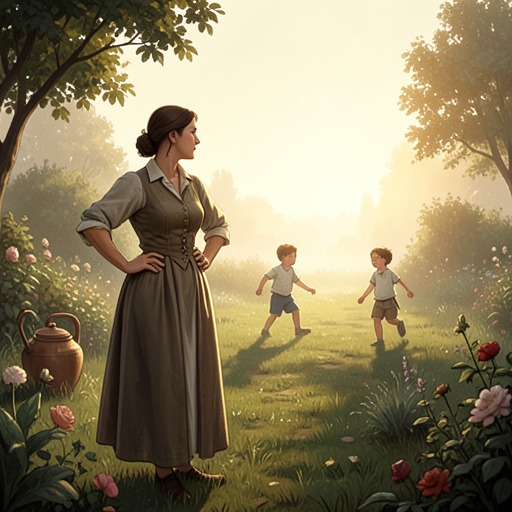
As a child, [Leda](entity:character-recall-character-leda-ed9a2c156084) learned to fear that her mother might disappear. Her mother repeatedly threatened to leave, and the young girl woke each morning anxious to find her still at home.
The memory later becomes part of Leda’s understanding of how fear and anger pass between mothers and daughters. Her mother’s shifts between gentleness and rage remain lodged in Leda’s sense of herself and her own capacity for motherhood.
At eighteen
Leaving Naples
At eighteen, [Leda](entity:character-recall-character-leda-ed9a2c156084) leaves [Naples](entity:location-recall-location-naples-13ce8e2c4961) to study in [Florence](entity:location-recall-location-florence-29107dc52cb3). She is determined to escape the family world she associates with violence, sentimentality, and limited possibilities, and to build a life shaped by study and independence.
Her departure gives her the distance she wants, but it does not erase the language and habits she has inherited. The uneasy pull between escape and belonging will recur throughout her adult life.
Before Bianca’s birth
Marriage and Ambition
[Leda](entity:character-recall-character-leda-ed9a2c156084) builds an academic life with [Gianni](entity:character-recall-character-gianni-2f779446f8bb), a kind and ambitious university colleague. Their work and aspirations develop alongside their marriage, though Gianni’s professional opportunities ultimately advance more easily than hers.
The imbalance matters later, when Leda experiences family life as narrowing the time and energy available for her own work. Her desire to become more than a wife and mother will grow out of this conflict.
When Leda is twenty-three
Bianca’s Birth
[Leda](entity:character-recall-character-leda-ed9a2c156084) becomes pregnant with [Bianca](entity:character-recall-character-bianca-579dc0b65e0a) while she and [Gianni](entity:character-recall-character-gianni-2f779446f8bb) are struggling to establish themselves professionally. She approaches pregnancy with discipline and pride, determined to guide the process rather than be overwhelmed by it.
Bianca’s birth brings Leda an intense joy. For a time, she can imagine motherhood as something she has mastered and transformed into a source of meaning and creative power.
Two years after Bianca’s birth
Marta’s Birth
Believing [Bianca](entity:character-recall-character-bianca-579dc0b65e0a) should have a sibling, [Leda](entity:character-recall-character-leda-ed9a2c156084) plans a second pregnancy. [Marta](entity:character-recall-character-marta-1ae34ecb25bb)’s arrival, however, feels radically different: Leda experiences the pregnancy as a bodily force that resists her control and destroys the ideal she had formed around her first birth.
Marta’s infancy deepens Leda’s exhaustion. The contrast between her two pregnancies becomes a source of guilt and confusion, exposing the gap between the mother she wishes to be and the feelings her body and mind actually produce.
During Marta and Bianca’s early childhood
The Overwhelmed Mother
With two young children demanding her attention, [Leda](entity:character-recall-character-leda-ed9a2c156084) struggles to study, sleep, and care for herself. [Marta](entity:character-recall-character-marta-1ae34ecb25bb)’s crying can feel like a reprieve from [Bianca](entity:character-recall-character-bianca-579dc0b65e0a)’s demands, a reaction that leaves Leda ashamed of her own relief.
She wants to be a good mother, yet experiences the children’s needs as competing claims on a life she has not been able to live. This contradiction becomes central to her later decision to leave.
During Leda’s academic frustration
Bianca’s Broken Glass
One afternoon, while [Leda](entity:character-recall-character-leda-ed9a2c156084) is struggling to finish an essay, five-year-old [Bianca](entity:character-recall-character-bianca-579dc0b65e0a) strikes her ear, apparently treating the moment as the start of a game. Leda hits her repeatedly, then drags her from the kitchen and shuts the door with enough force to shatter its glass panel.
Bianca stands unharmed but silent amid the broken glass, while Leda is frightened by how far her anger has carried her. The memory becomes one of the painful episodes she later tries to avoid confronting.
During Bianca’s early childhood
The Mina Doll
[Leda](entity:character-recall-character-leda-ed9a2c156084) gives [Bianca](entity:character-recall-character-bianca-579dc0b65e0a) her own childhood doll, [Mina](entity:object-recall-object-mina-145815b176c8), hoping the gift will ease the strain of caring for a second child. Bianca prefers another doll and eventually sits on Mina, removing her clothes and scribbling over her body.
Feeling that the doll has been violated and that her own childhood has been damaged, Leda tears Mina away and throws her from the balcony. She watches cars run over it before gathering Bianca into her arms, leaving the episode bound up with both cruelty and tenderness.
When the girls are young
Lucilla’s Intrusions
[Gianni](entity:character-recall-character-gianni-2f779446f8bb)’s cultured friend Lucilla repeatedly wins [Bianca](entity:character-recall-character-bianca-579dc0b65e0a) and [Marta](entity:character-recall-character-marta-1ae34ecb25bb) over with games and attention, then withdraws, leaving [Leda](entity:character-recall-character-leda-ed9a2c156084) to restore the routines and discipline the children resist. Leda resents Lucilla’s performance of effortless, endlessly available motherhood.
During a beach outing, Leda lashes out at Marta over a lost earring while Lucilla continues playing with the girls. The episode crystallizes Leda’s jealousy and her fear that other women can appear more loving to her children than she can.
Before Leda leaves her family
The Hitchhiking Couple
On a journey to [Gianni](entity:character-recall-character-gianni-2f779446f8bb)’s family home, [Leda](entity:character-recall-character-leda-ed9a2c156084) and Gianni pick up two English hitchhikers who have left their jobs and families to travel together. The woman, Brenda, speaks of the escape as the first thing in her life that has truly made sense.
Leda is captivated by Brenda’s apparent freedom and by the attention the couple gives her intellectual work. Their brief visit awakens a desire to imagine herself outside the exhausting routines of family life.
After the hitchhikers’ visit
Recognition at the Forster Conference
[Leda](entity:character-recall-character-leda-ed9a2c156084)’s professor sends her to a conference on E. M. Forster in [London](entity:location-recall-location-london-420923d4a60a). There, [Professor Hardy](entity:character-recall-character-professor-hardy-ee0e2b94fc7e) cites and praises an article Leda has published, giving her an unexpected moment of academic recognition.
At the same time, Leda learns that Brenda had passed her work to Hardy. She accepts Hardy’s invitation to dinner and later sleeps with him, joining professional exhilaration to an intense sexual awakening.
Soon after the conference
The Decision to Leave
After returning home, [Leda](entity:character-recall-character-leda-ed9a2c156084) throws herself into work and becomes increasingly absorbed in her relationship with [Professor Hardy](entity:character-recall-character-professor-hardy-ee0e2b94fc7e). She tells [Gianni](entity:character-recall-character-gianni-2f779446f8bb) that she can no longer live with him, describing a need to discover who she is and what she can do.
Leda knows that her explanations conceal the extent of her ambition and desire. When Gianni realizes she is serious, she leaves him and the children behind rather than trying to reconcile her new life with family life.
The three years after Leda leaves
Three Years Away
[Leda](entity:character-recall-character-leda-ed9a2c156084) lives apart from [Gianni](entity:character-recall-character-gianni-2f779446f8bb), [Bianca](entity:character-recall-character-bianca-579dc0b65e0a), and [Marta](entity:character-recall-character-marta-1ae34ecb25bb) for three years. She pursues her academic work and experiences a powerful sense of freedom, while also feeling an absence that surfaces whenever she hears a child call for her mother.
Her daughters remain with Gianni, who sometimes takes them to [Naples](entity:location-recall-location-naples-13ce8e2c4961) to stay with Leda’s mother and relatives. Leda worries about their return to the world she escaped, but does not go back to them during this period.
At the end of the three-year separation
The Fruit-Peel Snake
When [Leda](entity:character-recall-character-leda-ed9a2c156084) returns to her family home to collect her belongings, [Bianca](entity:character-recall-character-bianca-579dc0b65e0a) and [Marta](entity:character-recall-character-marta-1ae34ecb25bb) ask her to peel an orange into a long snake of rind, a familiar game from their childhood. Leda recognizes that the simple act is what she wants to do with her daughters, and begins to cry.
The realization does not mean she has returned out of uncomplicated selflessness. Leda later understands that she went back for herself as much as she left for herself: life without her daughters had become more desperate than life with them.
Three years after leaving
Returning to Her Daughters
[Leda](entity:character-recall-character-leda-ed9a2c156084) resumes life with [Bianca](entity:character-recall-character-bianca-579dc0b65e0a) and [Marta](entity:character-recall-character-marta-1ae34ecb25bb), taking on most of the work of raising them while [Gianni](entity:character-recall-character-gianni-2f779446f8bb) eventually leaves for [Canada](entity:location-recall-location-canada-a93ef5aae6af). She tries to become a more present mother, though the years of separation remain a wound within the family.
Her daughters rarely respond when she tries to explain what drove her away. As adults, they move to [Toronto](entity:location-recall-location-toronto-64d205cf39d7) to live near their father, and Leda is surprised to feel relief rather than grief at their departure.
Before the summer vacation
The Daughters’ Departure
After [Bianca](entity:character-recall-character-bianca-579dc0b65e0a) and [Marta](entity:character-recall-character-marta-1ae34ecb25bb) move to [Toronto](entity:location-recall-location-toronto-64d205cf39d7), [Leda](entity:character-recall-character-leda-ed9a2c156084) finds herself free of daily childcare and household routines for the first time in decades. The quiet house and reduced demands make her feel light, as if she has only now definitively brought her daughters into the world.
She continues to speak with them by telephone and to meet their requests, but distance makes those exchanges feel less burdensome. Her renewed independence encourages her to take a summer vacation alone.
July 24, before the beach encounters
The Journey to the Ionian Coast
[Leda](entity:character-recall-character-leda-ed9a2c156084) rents a small apartment on the [Ionian coast](entity:location-recall-location-ionian-coast-0557202dc996) and drives south with books and papers for her teaching. At first she feels free of guilt, but anxiety rises halfway through the journey as she imagines heat, noise, and an unpleasant apartment.
The caretaker [Giovanni](entity:character-recall-character-giovanni-f2c58bf6f87f) welcomes her and carries her luggage to a modest penthouse with a terrace overlooking the sea. The fruit left for her looks beautiful but proves rotten inside, an unsettling note at the start of her holiday.
Leda’s first night at the apartment
A Cicada on the Pillow
That night, [Leda](entity:character-recall-character-leda-ed9a2c156084) finds a large cicada lying motionless on her pillow. She touches it with the hem of her bathrobe, sees it move, and throws it out of the window.
The encounter gives the vacation an uneasy beginning. The insect’s mute, damaged body also echoes Leda’s attention to the boundaries between living matter, vulnerability, and disgust.
The first week of the vacation
A Quiet Beach Routine
[Leda](entity:character-recall-character-leda-ed9a2c156084) finds a public beach reached through a pinewood and settles into a routine of swimming, reading, and working beneath an umbrella. [Gino](entity:character-recall-character-gino-ad3400000099), the young attendant, is attentive without being intrusive, and his nervousness reminds her of the young men her daughters might have liked.
She recognizes how much of her view of people has been shaped by [Bianca](entity:character-recall-character-bianca-579dc0b65e0a) and [Marta](entity:character-recall-character-marta-1ae34ecb25bb)’s tastes. For the moment, however, she enjoys the rare feeling that nobody depends on her care.
Several days into the vacation
Nina and Elena Appear
[Leda](entity:character-recall-character-leda-ed9a2c156084) begins watching [Nina](entity:character-recall-character-nina-507986764de1) and her young daughter, Elena, among a large, noisy Neapolitan family. Mother and child seem absorbed in each other, talking, swimming, and caring for Elena’s doll as though it were another child.
Nina’s tender ease with Elena makes Leda envious. The cadence of Nina’s dialect recalls both the warmth and the anger in Leda’s own mother’s speech, drawing her toward the pair even as she keeps her distance.
During the first crowded beach weekend
The Doll’s Shared Voice
Watching [Nina](entity:character-recall-character-nina-507986764de1) and Elena give the doll a voice, [Leda](entity:character-recall-character-leda-ed9a2c156084) becomes irritated by the way the mother and child alternately speak for it. She feels that they should choose one voice rather than pretending that the doll speaks with both of theirs.
Her reaction is disproportionate, and she nearly approaches them to stop their game. Instead, she walks away, blaming the crowded beach while the scene continues to expose her unease with the intimate bond she has been observing.
The following Saturday
The Family Beach Party
[Nina](entity:character-recall-character-nina-507986764de1)’s husband, Toni, arrives with gifts and relatives by motorboat. The family rearranges umbrellas to gather together, and [Leda](entity:character-recall-character-leda-ed9a2c156084) is asked to help translate for Dutch visitors so the group can make its arrangements.
After Leda has helped, Rosaria assumes she, too, will move to make room. Leda refuses, irritated by the family’s presumption and by her own participation in their demand. Toni eventually tells the others to leave Leda alone.
That Saturday evening
Rosaria’s Birthday
As [Leda](entity:character-recall-character-leda-ed9a2c156084) leaves the beach, Rosaria offers her a piece of birthday ice and tells her she is forty-two and expecting a girl after years of waiting for a child. The brief exchange softens Leda’s judgment of the family and makes her aware that she has ignored Rosaria as an individual.
Leda admits that she was anxious, then makes a careless remark about children being a cause for worry. She regrets it as she walks away, remembering [Bianca](entity:character-recall-character-bianca-579dc0b65e0a)’s and [Marta](entity:character-recall-character-marta-1ae34ecb25bb)’s complaints about her and the ways her words have hurt them.
On the walk back from the beach
The Pinecone Blow
As [Leda](entity:character-recall-character-leda-ed9a2c156084) walks through the pinewood, a large pinecone strikes her between the shoulder blades. She cannot tell whether it fell from a tree or was thrown, and finds a painful, bruise-like mark on her back.
The unexplained injury unsettles her and sends her thoughts back toward the family she has just judged. The bruise becomes one of several bodily signs that accompany the holiday’s return of old anxieties.
That Saturday night
The Call with Marta
[Leda](entity:character-recall-character-leda-ed9a2c156084) calls [Marta](entity:character-recall-character-marta-1ae34ecb25bb) to tell her about the injury, but Marta talks at length about her own plans and complaints without leaving Leda room to speak. Leda hears the absent presence of [Gianni](entity:character-recall-character-gianni-2f779446f8bb) in the conversation and imagines, bitterly, that Marta might have been born to someone else.
The call leaves Leda more agitated than before. Her daughters’ distance makes her feel both released from responsibility and painfully excluded from their lives.
That Saturday night
Giovanni’s Familiarity
At a bar, [Giovanni](entity:character-recall-character-giovanni-f2c58bf6f87f) speaks to [Leda](entity:character-recall-character-leda-ed9a2c156084) with an intimacy she has not invited, touching her arm and shoulder while his friends watch. She realizes that he may be performing a claim of closeness for the men at the table.
Rather than respond with anger, Leda briefly imagines playing along and gratifying his vanity. The encounter reveals her ambivalent amusement at male vulnerability and the ways attention can give her a sense of control.
The next Sunday afternoon
Elena Goes Missing
After a sleepless night, [Leda](entity:character-recall-character-leda-ed9a2c156084) returns to a crowded beach and finds Elena sitting alone near her umbrella. When [Nina](entity:character-recall-character-nina-507986764de1) realizes the child is missing, the family scatters in frantic search, while Nina repeatedly turns away from the sea.
Leda recognizes the terror of a lost child from her own past and joins the search. She finds Elena beneath the straw hat, crying not for her mother but because she cannot find her doll, and carries her back to the family.
Immediately after Elena is found
Leda Takes the Doll
The family celebrates Elena’s safe return, but the child remains inconsolable over the missing doll. [Leda](entity:character-recall-character-leda-ed9a2c156084) watches Rosaria search among the beach toys and hears Elena crying as she leaves for home.
Only then does Leda realize that she has the doll in her bag. She had picked it up from the sand while searching, but cannot explain why she kept it; the action feels neither like generosity nor like a deliberate plan.
That evening
The Doll Awakens Old Memories
At home, [Leda](entity:character-recall-character-leda-ed9a2c156084) plans to return the doll the next morning, then recognizes that her act has caused distress and cannot be excused as compassion. She takes the doll from her bag and examines its worn, water-filled body.
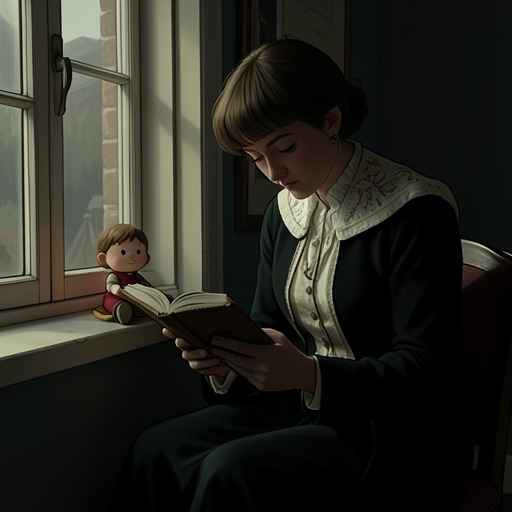
Handling it brings back memories of her own childhood doll, [Mina](entity:object-recall-object-mina-145815b176c8), and of the years when [Bianca](entity:character-recall-character-bianca-579dc0b65e0a) wanted Leda to serve as her doll. Leda recalls how exhaustion and resentment disrupted those games, and how she later threw Mina from the balcony.
That stormy night
A Storm and a Secret
As a storm sweeps over the town, [Leda](entity:character-recall-character-leda-ed9a2c156084) keeps the doll instead of returning it. She imagines buying clothes for it, then recognizes the absurdity of treating an act she cannot explain as if it were a thoughtful gift.
The doll becomes a focus for memories of maternal exhaustion, including the moment Leda hurled [Mina](entity:object-recall-object-mina-145815b176c8) from the balcony. She also recalls how [Bianca](entity:character-recall-character-bianca-579dc0b65e0a)’s childhood games briefly let her be cared for, even when she was too tired to respond with joy.
The morning after the storm
Nina’s Search for the Doll
Bad weather keeps [Leda](entity:character-recall-character-leda-ed9a2c156084) away from the beach. In town, she encounters [Nina](entity:character-recall-character-nina-507986764de1), Rosaria, and Corrado with Elena, who is ill and distressed, and learns that the family suspects another group of beachgoers may have taken the doll.
Elena clings to Nina and refuses to stand alone. Leda recognizes the mother’s exhaustion and the child’s fear of separation, but says nothing about having the doll in her purse.
During the toy-store encounter
Leda’s Confession
As [Nina](entity:character-recall-character-nina-507986764de1) struggles to manage Elena’s crying, [Leda](entity:character-recall-character-leda-ed9a2c156084) tells the family that she once left her own daughters when [Bianca](entity:character-recall-character-bianca-579dc0b65e0a) was six and [Marta](entity:character-recall-character-marta-1ae34ecb25bb) four, then returned three years later. She explains that sometimes a person has to escape in order not to die.
The disclosure unsettles Nina, while Rosaria reacts with shock. Leda advises Nina not to buy Elena another doll, believing the loss cannot be repaired by replacing the object, then leaves without admitting that she has kept it.
Later that rainy day
The Memory of Violence
After confessing, [Leda](entity:character-recall-character-leda-ed9a2c156084) is overwhelmed by memories of the desperation that preceded her departure. She recalls striking [Bianca](entity:character-recall-character-bianca-579dc0b65e0a) when the child repeatedly treated her frustration as a game, then dragging her into the hall and breaking a glass panel in the door.
The memory revives Leda’s fear of what she was capable of and her sense that she had reached a point of danger within herself. The past is not an excuse for leaving, but it reveals the pressure and violence she had been unable to contain.
In a memory from the girls’ early childhood
Lucilla and the Lost Earring
[Leda](entity:character-recall-character-leda-ed9a2c156084) recalls a beach outing when Lucilla’s attention to the children made her feel displaced and judged. When [Marta](entity:character-recall-character-marta-1ae34ecb25bb) comes to lie on Leda’s sandy stomach, Leda angrily asks [Gianni](entity:character-recall-character-gianni-2f779446f8bb) to take the child away.
After losing an earring, Leda blames Marta with hatred and disrupts the game the others are playing. She later demands that Gianni cut off contact with Lucilla, though he eventually has an affair with her after their marriage ends.
In the years before Leda left
Brenda’s Afterimage
[Leda](entity:character-recall-character-leda-ed9a2c156084) remembers how meeting Brenda and her partner opened an imagined path away from family routine. She pictured herself traveling freely and began to feel desire and ambition as forces that belonged to her own life.
Though she did not immediately leave, the image persisted through a long period of waiting and frustration. It made departure feel possible, even as she continued to care for her children and conceal the intensity of her dissatisfaction.
During Leda’s three-year absence
The Conference Affair’s Cost
[Leda](entity:character-recall-character-leda-ed9a2c156084)’s relationship with [Professor Hardy](entity:character-recall-character-professor-hardy-ee0e2b94fc7e) and her academic success become part of the new life she builds after leaving her family. She is proud of her work and wants to believe her achievements are entirely her own, despite knowing that Brenda helped bring her writing to Hardy’s attention.
The separation allows Leda to pursue her desires, but it does not free her from guilt or the knowledge that [Bianca](entity:character-recall-character-bianca-579dc0b65e0a) and [Marta](entity:character-recall-character-marta-1ae34ecb25bb) were present during her affair and departure. Her later explanations to them go unanswered.
After the rainy days
The Flyers for Nani
When the weather clears, [Leda](entity:character-recall-character-leda-ed9a2c156084) sees the family’s children handing out flyers with Elena’s photograph and a reward for the missing doll. She folds one and puts it in her purse beside the new clothes she has bought for [Nani](entity:object-recall-object-nani-496498e771bb).
The public search makes her concealment harder to treat as a private, harmless act. She is now withholding not only the doll but the knowledge that could end the child’s distress.
That evening
Leda and Gino Discuss Nina
[Leda](entity:character-recall-character-leda-ed9a2c156084) has dinner with [Gino](entity:character-recall-character-gino-ad3400000099), hoping at first for conversation and then discovering that she wants to hear about [Nina](entity:character-recall-character-nina-507986764de1) and her family. He tells her that Nina is unhappy with her husband’s relatives and has been thinking about returning to university.
Gino’s admiration for Nina is clear, and he warns Leda that the family can be dangerous. Leda’s interest in the young attendant is mixed with a growing fixation on Nina and the domestic life she has been watching.
Later that night
A Doll Dressed in Secret
Back at the apartment, [Leda](entity:character-recall-character-leda-ed9a2c156084) sees [Nani](entity:object-recall-object-nani-496498e771bb) lying on the sofa and tries to imagine how she might return the doll with a new dress. The plan collapses when she discovers dark liquid leaking from its mouth and realizes there is something foul trapped inside.
The doll’s physical decay makes her concealment feel more disturbing, not less. Leda continues to hold on to it while telling herself that she may give it back the next day.
The following day
Nina’s Kiss with Gino
[Leda](entity:character-recall-character-leda-ed9a2c156084) goes to the beach and later hears [Nina](entity:character-recall-character-nina-507986764de1) laughing in the pinewood. Following the sound, she sees Nina leaning against a tree while [Gino](entity:character-recall-character-gino-ad3400000099) kisses her and reaches for her breast.
Nina accepts the kiss but gently resists his hand. Leda ends the call she had made to the number on the flyer and withdraws without confronting them, carrying the sight of their secret into the rest of the day.
The next morning
A Meeting at the Fair
[Nina](entity:character-recall-character-nina-507986764de1) calls [Leda](entity:character-recall-character-leda-ed9a2c156084) at a crowded town fair and says she has been following her through the stalls. She arrives with Elena in a stroller, and Leda pins Nina’s windblown hat in place with a long amber-handled hatpin she has just found.
Nina tells Leda she wants to be like her: independent, cultivated, and unafraid. She admits she is exhausted by motherhood and drawn to [Gino](entity:character-recall-character-gino-ad3400000099), though she insists that the affair is only a way of feeling young again.
During the conversation at the fair
Leda Explains Her Departure
[Nina](entity:character-recall-character-nina-507986764de1) asks why [Leda](entity:character-recall-character-leda-ed9a2c156084) left her daughters. Leda answers that she loved them so much that she feared their claims would prevent her from becoming herself, and she describes feeling both liberated and tormented by their absence.
She says she returned because she could not create anything of her own that equaled them, then clarifies that she came back for love of herself as much as she left for the same reason. Nina listens closely, sensing in Leda’s story a possible future for her own unrest.
At the end of the fair encounter
The Family Finds Nina
[Nina](entity:character-recall-character-nina-507986764de1) asks whether she can telephone [Leda](entity:character-recall-character-leda-ed9a2c156084), then kisses her lightly on the lips. Leda notices Rosaria and Toni watching from the far end of the garden and warns Nina without making her turn around.
Nina leads Leda to the others. Toni is cordial, but Leda sees how tightly Nina is situated between her husband and sister-in-law, and how quickly she returns to their orbit. Nina leaves with Toni, and Leda feels the distance between herself and her daughters more sharply.
That afternoon
The Sandworm in Nani
At home, [Leda](entity:character-recall-character-leda-ed9a2c156084) empties water from the doll and discovers a small sandworm lodged inside its mouth and belly. She carefully removes it with tweezers, feeling pity for the creature despite her revulsion.
The worm turns the doll’s imagined pregnancy into a physical, unsettling fact. As Leda cleans [Nani](entity:object-recall-object-nani-496498e771bb), memories of her own pregnancies—especially the alienation she felt while carrying [Marta](entity:character-recall-character-marta-1ae34ecb25bb)—surface with new force.
The following days
Nina’s Strain in Public
On the beach, Elena clings to [Nina](entity:character-recall-character-nina-507986764de1) and continues to show the distress caused by losing her doll. Nina eventually loses patience with Rosaria, while Toni draws her away and the family watches the tension settle back into routine.
[Leda](entity:character-recall-character-leda-ed9a2c156084) observes Nina’s exhaustion and the family’s influence over her, while [Gino](entity:character-recall-character-gino-ad3400000099) watches from a distance. The scenes strengthen Leda’s sense that Nina’s private desire to escape is hemmed in by a powerful family structure.
That weekend evening
The Cinema Confrontation
At a local cinema, a group of boys from the Neapolitan family disrupts the film with shouting and insults. [Leda](entity:character-recall-character-leda-ed9a2c156084) tells them to stop and threatens to call the usher, then leaves when the disturbance resumes.
The next day the boys jeer at her on the beach. Leda considers appealing to Toni but feels ashamed of being drawn into the family’s rules and authority, and eventually leaves the crowded shore early.
The following Saturday
Fear in the Pinewood
Walking through the pinewood, [Leda](entity:character-recall-character-leda-ed9a2c156084) hears footsteps and laughter behind her and becomes convinced that she is being followed. The memory of the pinecone striking her returns, and she hurries toward home in fear.
The episode unsettles her sense of safety and intensifies her feeling that the beach holiday has become hostile. At the apartment, she finds the doll still with her and begins to recognize how one unexplained act has generated further consequences.
That Saturday evening
Leda’s Body Changes
After seeing herself in the mirror, [Leda](entity:character-recall-character-leda-ed9a2c156084) suddenly feels excessively thin and aged. At a drugstore scale, the measurements repeatedly suggest that she is shrinking, reviving a childhood fear of being forced backward through earlier stages of life.
The discovery unsettles the image of renewed youth that had accompanied her daughters’ departure. Her body, like her memories, no longer seems fully under her control.
That Saturday night
Dancing with Giovanni and Gino
At a town dance, [Leda](entity:character-recall-character-leda-ed9a2c156084) first dances with [Giovanni](entity:character-recall-character-giovanni-f2c58bf6f87f), whose seriousness and courtesy make her feel at ease. Later, she dances with [Gino](entity:character-recall-character-gino-ad3400000099), whose youth and nearness make the evening seem divided between two different stages of her life.
Gino appears to want [Nina](entity:character-recall-character-nina-507986764de1) to see him with Leda, but the crowd prevents them from reaching her. When he walks Leda home, he tells her that Nina appreciated the hatpin and asks whether Leda will lend her apartment to Nina and him.
Late that Saturday night
The Apartment Request
[Leda](entity:character-recall-character-leda-ed9a2c156084) reacts sharply to [Gino](entity:character-recall-character-gino-ad3400000099)’s request to borrow her apartment for a few hours. She wants to speak directly with [Nina](entity:character-recall-character-nina-507986764de1), especially after learning that [Giovanni](entity:character-recall-character-giovanni-f2c58bf6f87f) has connections to Nina’s husband and family.
Unable to sleep, Leda realizes Nina may be asking for more than a place to meet Gino. She may be seeking Leda’s approval, support, or refusal—any response that would help her face a choice she cannot make alone.
That night
The Risk Nina Faces
[Leda](entity:character-recall-character-leda-ed9a2c156084) thinks through the differences between her own departure and the danger [Nina](entity:character-recall-character-nina-507986764de1) might face. Leda had been ambitious, supported by educated friends, and able to leave a husband who did not physically threaten her; Nina has far fewer defenses.
Leda recognizes that Nina has idealized her as a model of freedom, just as Leda once idealized Brenda. She considers whether she can offer Nina a gesture of support without taking responsibility for Nina’s choices.
The following Sunday
Nina Asks for the Keys
[Nina](entity:character-recall-character-nina-507986764de1) eventually comes to [Leda](entity:character-recall-character-leda-ed9a2c156084)’s apartment and says she cannot endure her situation any longer. Leda warns her that she is risking everything and suggests that she return to her studies and find work, but Nina says escape is the only thing she truly wants.
Leda gives Nina the keys. Nina asks what Leda thinks of her and whether Leda will help; Leda answers that she is already doing so, though her support remains uncertain and incomplete.
Immediately afterward
The Doll’s Return
Before [Nina](entity:character-recall-character-nina-507986764de1) leaves, [Leda](entity:character-recall-character-leda-ed9a2c156084) brings out the doll she has kept. Nina realizes that Leda took it while her daughter was crying and that she hid the truth instead of helping them.
Nina demands to know why Leda did it, but Leda cannot offer a clear explanation. She calls herself an [unnatural mother](entity:expression-recall-expression-unnatural-mother-5f75cea2a5d1), and Nina agrees in anger, taking the doll back and rejecting Leda’s attempt to give her the apartment keys.
Moments after Nina takes the doll
Nina’s Hatpin Wound
As [Nina](entity:character-recall-character-nina-507986764de1) leaves, [Leda](entity:character-recall-character-leda-ed9a2c156084) tells her she is departing that night and the apartment will be empty. Nina turns back, hisses furious insults in dialect, and the hatpin pierces Leda’s left side beneath the ribs.
Nina drops the pin and runs off with the doll, leaving the keys and hat behind. Leda sees a small bead of blood and waits for the pain to become more serious, but the wound soon seems to quiet.
Near the end of the vacation
A Call from the Daughters
[Leda](entity:character-recall-character-leda-ed9a2c156084) packs her bags and prepares to leave. Her phone rings with [Marta](entity:character-recall-character-marta-1ae34ecb25bb)’s name, and [Bianca](entity:character-recall-character-bianca-579dc0b65e0a) and Marta speak together, playfully imitating the Neapolitan cadence that still surfaces in their mother’s speech.
They ask why Leda has not called and whether she is alive or dead. Deeply moved, she answers that she is dead but fine, a response that holds her injury, her old turmoil, and her renewed connection to her daughters in one unresolved instant.
After leaving the seaside town
The Car Crash
After the final encounter at the apartment, [Leda](entity:character-recall-character-leda-ed9a2c156084) drives away. Within less than an hour she becomes ill, loses her strength at the steering wheel, and experiences a disorienting image of a calm sea beneath a red warning flag.
Her car strikes the guardrail without catastrophic consequences, but she suffers an unexplained injury in her left side. The episode frames the story’s aftermath: the physical mark recalls [Nina](entity:character-recall-character-nina-507986764de1)’s hatpin, while Leda remains unable to explain the gesture or its meaning to anyone.
After the car crash
The Hospital Awakening
[Leda](entity:character-recall-character-leda-ed9a2c156084) wakes in a hospital room and recognizes the image of herself hesitating before the flat sea. Doctors tell her that the crash was not critical, though the injury in her left side has no clear explanation.
Friends visit, and Leda says drowsiness caused the accident. She knows this is not true, but keeps silent about the senseless action she believes lies at its origin, ending the novel with the limits of what she can understand or confess.